
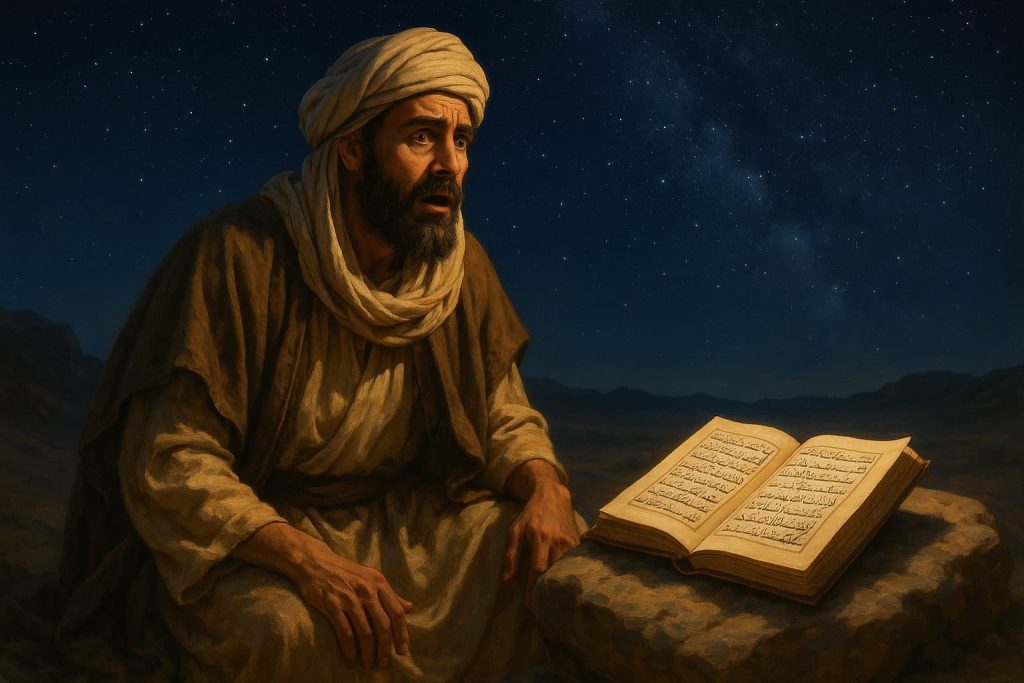
7 Literary Miracles of The Quran That Changed Arabic Forevter
The Quran stands as one of history’s most extraordinary literary achievements, transforming not just religious thought but the entire landscape of Arabic language and literature. For over 14 centuries, scholars, linguists, and literary critics have marveled at its unique linguistic features that defy conventional categorization. The Foundation of Linguistic Perfection What Defines a Linguistic Miracle? A linguistic miracle transcends ordinary literary achievement by combining multiple layers of meaning, sound, rhythm, and structure in ways that appear impossible to replicate. The Quran demonstrates this through its seamless integration of complex grammatical forms, intricate sound patterns, and profound semantic depth all while maintaining perfect clarity and accessibility. The Arabic language itself presents unique challenges for any writer. Its tri-consonantal root system, extensive morphological variations, and complex syntactic structures require extraordinary skill to master. The Quran not only navigates these complexities flawlessly but elevates them to create entirely new forms of expression. The Perfect Balance Between Poetry and Prose Unlike traditional Arabic poetry, which followed strict metrical patterns, or prose, which lacked structured rhythm, the Quran created something entirely unprecedented. It maintains a rhythmic flow that captivates listeners while avoiding the constraints of conventional poetic meters. This unique style, known as saj’, creates a mesmerizing cadence that aids memorization while preserving semantic precision. Each verse demonstrates this balance through carefully crafted sound patterns that enhance meaning rather than overshadowing it. The text flows with natural rhythm while maintaining the flexibility to address diverse topics from legal matters to spiritual guidance without sacrificing its distinctive musical quality. The Challenge of Inimitability Understanding I’jaz al-Quran The concept of I’jaz al-Quran refers to the Quran’s fundamental inimitability the idea that its linguistic achievement cannot be replicated by human effort. This challenge extends beyond mere stylistic imitation to encompass the text’s multi-layered meanings, its prophetic accuracy, and its transformative social impact. Surah Al-Baqarah (2:23) directly addresses this challenge: “وَإِن كُنتُمْ فِي رَيْبٍ مِّمَّا نَزَّلْنَا عَلَىٰ عَبْدِنَا فَأْتُوا بِسُورَةٍۢ مِّن مِّثْلِهِۦ وَٱدْعُوا۟ شُهَدَآءَكُم مِّن دُونِ ٱللَّهِ إِن كُنتُمْ صَـٰدِقِينَ” — Surah Al-Baqarah (2:23) “And if you are in doubt about what We have sent down upon Our Servant [Muhammad], then produce a surah the like thereof and call upon your witnesses other than Allah, if you should be truthful.” — Surah Al-Baqarah (2:23) This verse represents one of literature’s most audacious claims an open challenge to humanity’s greatest literary minds. The Failure of Countless Attempts throughout history, numerous scholars, poets, and literary figures have attempted to produce something comparable to Quranic verses. Despite their expertise in Arabic grammar, rhetoric, and poetic composition, these efforts have consistently fallen short of the Quran’s linguistic standard. The most telling aspect of these failed attempts lies not in their obvious inadequacy, but in how they highlight specific elements that make the Quran unique. Each attempt reveals different layers of the Quran’s complexity whether in its sound patterns, semantic depth, or structural innovations that resist duplication. Revolutionary Impact on Arabic Literature Before and After: The Literary Transformation Pre-Islamic Arabic poetry reached remarkable heights through masters like Imru’ al-Qais and Antara ibn Shaddad. Their works, known as the Mu’allaqat, represented the pinnacle of Arabic literary achievement, combining vivid imagery, complex metaphors, and masterful control of traditional meters. The Quran’s emergence changed everything. Its novel approach to rhythm, its innovative use of rhetorical devices, and its seamless blend of the elevated and accessible created a new paradigm. Traditional poets found their established techniques inadequate for capturing the Quran’s unique beauty and power. The Silence of Great Poets The most dramatic evidence of the Quran’s literary impact comes from the response of Arabia’s master poets. Many of the greatest literary figures of the time individuals who had built their reputations on eloquence and verbal skill fell silent when confronted with Quranic language. Labid ibn Rabi’ah, one of the authors of the Mu’allaqat, reportedly stopped composing poetry after hearing the Quran, declaring that his work seemed insignificant by comparison. This wasn’t mere religious conversion; it represented a literary judgment from someone qualified to assess Arabic eloquence at its highest level. Establishing New Literary Standards The Quran didn’t simply compete with existing Arabic literature it redefined what Arabic could accomplish. Its influence extended far beyond religious contexts, inspiring new approaches to prose writing, establishing novel rhetorical techniques, and expanding the language’s expressive possibilities. Subsequent Arabic literature shows clear Quranic influence in its rhythm, imagery, and structural approaches. Even secular works began incorporating elements first perfected in the Quran, demonstrating its lasting impact on the entire literary tradition. Seven Specific Literary Miracles 1. Phonetic Harmony and Sound Symbolism The Quran’s sound patterns create meaning beyond the semantic level. Verses dealing with harsh realities often employ harder consonants, while passages about mercy and forgiveness flow with softer sounds. This phonetic symbolism enhances the text’s emotional impact while maintaining perfect Arabic pronunciation rules. 2. Structural Mathematical Precision Recent linguistic analysis has revealed extraordinary mathematical patterns within Quranic structure. Word counts, letter distributions, and verse arrangements follow complex numerical relationships that appear deliberate yet remain aesthetically seamless. 3. Multi-Layered Semantic Depth Individual Quranic verses often function on multiple interpretive levels simultaneously. A single passage might contain legal guidance, spiritual instruction, historical reference, and prophetic insight without any contradiction or confusion between these layers. 4. Perfect Grammatical Innovation The Quran introduces grammatical constructions that expand Arabic’s expressive range while maintaining complete linguistic correctness. These innovations have been adopted into standard Arabic usage, demonstrating their natural integration with the language’s fundamental structure. 5. Rhythmic Memorability The text’s unique rhythm facilitates memorization to an extraordinary degree. Millions of people have memorized the entire Quran, including many who don’t speak Arabic natively a feat made possible by its distinctive sound patterns and structural coherence. 6. Contextual Eloquence Each Quranic passage demonstrates perfect appropriateness to its context while maintaining the text’s overall stylistic unity. Whether addressing intimate personal guidance or broad social principles, the language remains consistently elevated yet accessible. 7. Temporal Transcendence The Quran’s language speaks as powerfully to contemporary readers as it did to

