
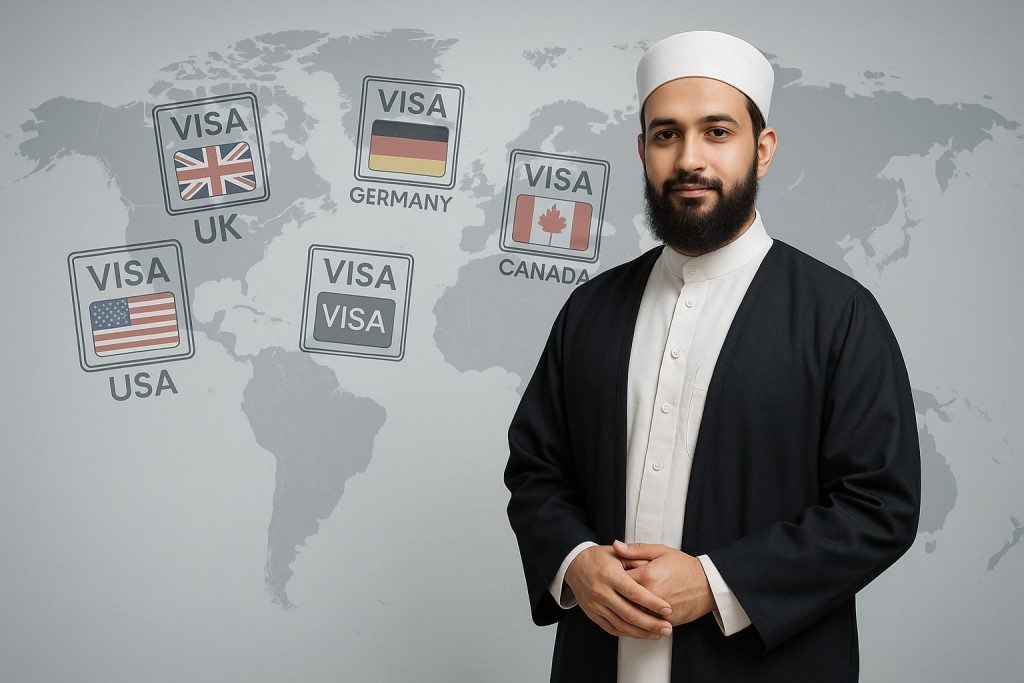
Top 5 Countries Offering Islamic Visas to Muslim Scholars
Muslim scholars can apply for religious worker visas to teach, research, and support Islamic communities abroad. These visas highlight the importance of religious leaders in multicultural societies. Requirements often include sponsorship from recognized institutions and proof of qualifications. While procedures vary, the goal is to welcome scholars who provide cultural and spiritual guidance. Which Countries Give Islamic Visas to Scholars? Religious worker visas serve as specialized immigration pathways designed for individuals who contribute to the spiritual and cultural life of communities. These visas typically require sponsorship from established religious institutions and proof of theological qualifications. The selection of the top five developed countries is based on several key criteria: the clarity of their religious worker visa programs, the size and establishment of their Muslim communities, the presence of sponsoring institutions like mosques and Islamic centers, and the overall accessibility of their application processes. The five leading destinations for Muslim scholars are: United Kingdom – Through the T2 Minister of Religion visa United States – Via the R-1 Religious Worker Visa Germany – Under skilled migration programs for religious workers Australia – Through the Religious Worker visa (subclass 408) Canada – Via various religious worker pathways Each of these countries has developed frameworks that recognize Islamic scholarship while maintaining requirements that ensure genuine religious purpose and community benefit. Does the UK Allow Muslim Scholars? The United Kingdom offers one of the most structured pathways for Muslim scholars through its T2 Minister of Religion visa category. This visa specifically caters to religious workers, including Islamic scholars, imams, and other qualified religious practitioners. UK T2 Minister of Religion Visa Requirements The T2 Minister of Religion visa requires applicants to demonstrate several key qualifications. Scholars must have a genuine offer from a UK-based sponsoring organization, which must be a licensed sponsor under the UK’s immigration system. The role must be primarily focused on leading a congregation in worship, preaching, or providing pastoral care. Educational requirements include formal theological qualifications or extensive experience in Islamic scholarship. The UK Home Office typically looks for evidence of theological training, such as degrees from recognized Islamic universities or extensive study under qualified scholars. Language proficiency in English is mandatory, with most applicants needing to pass an approved English language test. Sponsoring Institutions in the UK Mosques, Islamic centers, and educational institutions across the UK can serve as sponsors for Muslim scholars. These organizations must hold a valid sponsor license and demonstrate their ability to support the scholar both professionally and financially. Major Islamic institutions in cities like London, Birmingham, and Manchester frequently sponsor scholars from various Islamic traditions. The sponsoring institution must also prove that the role cannot be filled by a resident worker and that the scholar will make a genuine contribution to the UK’s religious landscape. This requirement emphasizes the importance of specialized knowledge or unique qualifications that the scholar brings to the community. Can Scholars Get Religious Visas in the USA? The United States provides opportunities for Muslim scholars through its R-1 Religious Worker Visa program, which has been specifically designed to accommodate religious practitioners from all faiths, including Islam. R-1 Religious Worker Visa Overview The R-1 visa allows Muslim scholars to work temporarily in the United States for up to five years. This visa category covers various religious roles, including teaching, conducting worship services, and providing religious counseling within Muslim communities. Applicants must be members of a religious denomination that has a bona fide nonprofit religious organization in the United States. For Muslim scholars, this typically means affiliation with established Islamic organizations, mosques, or Islamic educational institutions that hold proper nonprofit status. Application Requirements and Process The application process requires extensive documentation of both the scholar’s qualifications and the sponsoring organization’s legitimacy. Scholars must provide evidence of their theological education, which might include degrees from Islamic universities, certification from recognized Islamic institutions, or documentation of extensive study under qualified Islamic scholars. The sponsoring U.S. organization must demonstrate its nonprofit religious status and prove its ability to compensate the scholar. Financial documentation showing the organization’s capacity to support the scholar throughout their stay is essential for approval. Recognition of Islamic Institutions The U.S. immigration system recognizes various Islamic institutions as legitimate sponsors, including established mosques, Islamic centers, and Islamic schools. Organizations like the Islamic Society of North America (ISNA) and local Islamic centers across the country have successfully sponsored scholars under this program. The key requirement is that the sponsoring organization must have been conducting regular religious activities for at least two years before filing the petition. This requirement ensures that only established, legitimate religious organizations can bring scholars to the United States. Do Muslim Scholars Get Visas in Germany? Germany approaches religious visas through its broader skilled migration framework, recognizing religious workers as specialized professionals who contribute to the country’s cultural and social fabric. Germany’s Religious Worker Approach Unlike some other countries, Germany doesn’t have a specific “religious worker visa” category. Instead, Muslim scholars typically apply through employment-based visas, particularly when sponsored by religious institutions, cultural organizations, or educational establishments that recognize their scholarly contributions. The German system emphasizes the educational and cultural value that Islamic scholars bring to German society. Scholars who can demonstrate expertise in Islamic studies, Arabic language instruction, or interfaith dialogue often find pathways through academic or cultural institution sponsorship. Cultural and Educational Contributions German institutions value Islamic scholars who can contribute to interfaith understanding, academic research, or community education. Universities with Islamic studies programs, cultural centers, and established Muslim organizations frequently seek qualified scholars for teaching, research, or community leadership roles. The application process requires demonstrating both religious qualifications and the ability to integrate into German academic or cultural settings. Proficiency in German language, while not always mandatory initially, significantly strengthens applications and long-term prospects. Eligible Sponsoring Institutions Various types of institutions in Germany can sponsor Muslim scholars, including universities with Islamic studies departments, cultural associations, and established Muslim community organizations. The sponsoring institution must demonstrate the scholar’s role in contributing to Germany’s multicultural society and religious understanding.
