
First Roza 2026 Pakistan – Pehla Roza Kab Hai? Ramadan 2026 Start Date & Complete Guide
Learn how making sincere dua can bring comfort, strength, and closeness to Allah in every situation of life.


Learn how making sincere dua can bring comfort, strength, and closeness to Allah in every situation of life.

Learn how making sincere dua can bring comfort, strength, and closeness to Allah in every situation of life.
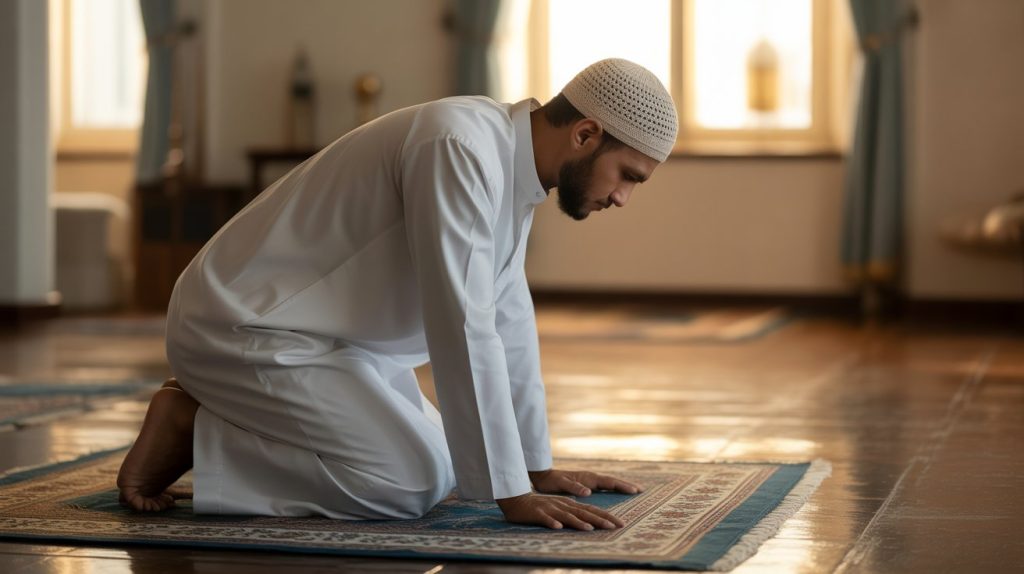
Prayer (Ṣalāh) is the foundation of a Muslim’s life, serving as a direct connection between the believer and Allah. For Muslims, Prayer Times in the USA hold special importance because of the country’s vast geography and multiple time zones. These differences cause prayer times to vary from one state to another and even between nearby cities. Yet, the essence of prayer remains the same devotion and obedience to Allah. Understanding how Prayer Times in the USA are calculated helps Muslims maintain accuracy and strengthen their spiritual connection. The Importance of Performing Prayers at Their Appointed Times In Islam, the concept of time is sacred. Allah has created time as a measure through which humans organize their lives and fulfill their obligations. Among all the acts of worship, Salah is the one most directly tied to time. Every prayer has a beginning and an ending, determined by the position of the sun. Performing prayer within its proper time is not only a matter of ritual discipline but also an act of obedience to the divine command. Qur’anic Reference إِنَّ الصَّلَاةَ كَانَتْ عَلَى الْمُؤْمِنِينَ كِتَابًا مَّوْقُوتًا “Indeed, prayer has been decreed upon the believers a decree of specified times.” (Surah An-Nisa, 4:103) This verse clarifies that Salah is not a random act of worship performed at convenience but a scheduled duty. Every Muslim, wherever they may live, must recognize these specific times and adjust their daily life accordingly. The discipline of Salah builds mindfulness, punctuality, and submission to Allah’s will. For Muslims in America, where sunrise and sunset vary dramatically across regions and seasons, this command becomes both a test and a reminder. It encourages them to be aware of the sun’s position, the local time, and their responsibility toward daily worship, even amidst the fast-paced rhythm of modern life. Why Prayer Times Differ by State in the USA The United States is a vast country extending from the Atlantic Ocean in the east to the Pacific Ocean in the west, crossing multiple time zones and latitudes. This wide span naturally causes differences in prayer times. The movement of the sun across the sky determines when Fajr begins and when Isha ends, and since the sun’s position is not the same everywhere, prayer times cannot be identical from one place to another. Latitude and the North–South Variation Latitude plays a crucial role in determining the length of days and nights. States located in the northern part of the U.S., such as Minnesota, Washington, and Alaska, experience longer days during summer and shorter ones during winter. This affects prayer timings significantly. In northern states, Fajr and Isha may occur very early or very late depending on the season. For example, during June in Seattle, Fajr may begin around three in the morning, while in December, it may start closer to six. On the other hand, southern states like Texas, Florida, and Louisiana have much steadier daylight patterns throughout the year. The time difference between summer and winter is not as extreme, allowing Muslims there to experience a more balanced prayer schedule. Thus, the higher the latitude, the more pronounced the change in prayer times. Longitude and the East–West Difference Longitude determines how far east or west a place is located. The U.S. has six major time zones: Eastern, Central, Mountain, Pacific, Alaska, and Hawaii–Aleutian. As one moves westward, prayer times occur later. A Muslim in New York will begin Fajr and all subsequent prayers earlier than someone in California, even though both experience the same date. This is because the sun rises later as you travel west. Therefore, a prayer that occurs at 6:00 AM in New York might not occur until 3:00 AM or 4:00 AM in Los Angeles when converted by local time. Seasonal Changes and the Earth’s Tilt Another major reason for the difference in prayer times across states is the change of seasons. The tilt of the Earth on its axis causes varying lengths of daylight throughout the year. During summer, the sun remains longer in the sky, resulting in late Maghrib and Isha prayers. In contrast, during winter, the sun sets early, making Maghrib and Isha much earlier. Similarly, Fajr in summer comes very early, while in winter it appears late. For Muslims in the United States, especially those in northern regions, these changes are quite noticeable. In winter, one might find that Dhuhr, Asr, and Maghrib come in quick succession, while in summer, the gap between them stretches wide. Local Terrain and Horizon Factors Local geography also has a small but significant effect on prayer times. Cities near mountains, highlands, or coastal areas may have slightly different sunrise and sunset times due to horizon elevation. A mountainous city might see the sun rise later and set earlier than a flat coastal city at the same latitude. These natural variations explain why prayer schedules differ even within the same state. How Prayer Times Are Determined Scientifically and Spiritually Islamic prayer times are calculated through a combination of astronomy and faith. They are based on the movement of the sun and the light conditions observed at different points of the day. Fajr begins when the first light appears before sunrise, spreading horizontally across the horizon. Dhuhr starts when the sun has passed its zenith, meaning it has reached its highest point and begins to decline. Asr begins when the shadow of an object becomes equal to its length (or twice its length according to some schools of thought). Maghrib starts immediately after sunset, and Isha begins when the twilight disappears completely, marking full darkness. In the United States, Islamic scholars and institutions often use scientific data and sun angles to calculate these timings. For example, the beginning of Fajr and Isha is often determined by when the sun is 15° to 18° below the horizon. The difference in methods can cause small variations, but all aim to ensure accuracy in fulfilling this obligation. Examples of Prayer Time Differences Across the USA New York In New York City, summers
